DayZ Badlands Heat Stroke: Stages, Shade, and Cures
DayZ Badlands heat stroke builds in the sun and kills without a gunshot. See the four stages and how shade, water, and wet clothes stop it.
Nasdara does not forgive a long walk in the open. On the Badlands map, the sun is a medical threat, and DayZ Badlands heat stroke is one of the fastest ways a geared run ends without a single shot fired. DayZ Badlands heat stroke is not an infection, so the pills that fix cholera will not touch it. If your temperature climbs while your water is low, a hidden heat build-up keeps rising until you vomit, black out, and lose health.
Bohemia describes danger on this map as constant: too much sun, and wind that can turn into sandstorms. Water is scarce, and you need it both to drink and to cool off. Treat heat as a second survival bar, right next to food.
Why the Nasdara Sun Becomes a Medical Problem
Chernarus and Livonia punish you with cold, rain, and wolves. Nasdara, the Badlands map shipped with DayZ 1.30, flips that script. Overheating is normal, shade is a resource, and standing in the open to craft or eat is how fresh spawns die before they find a gun.
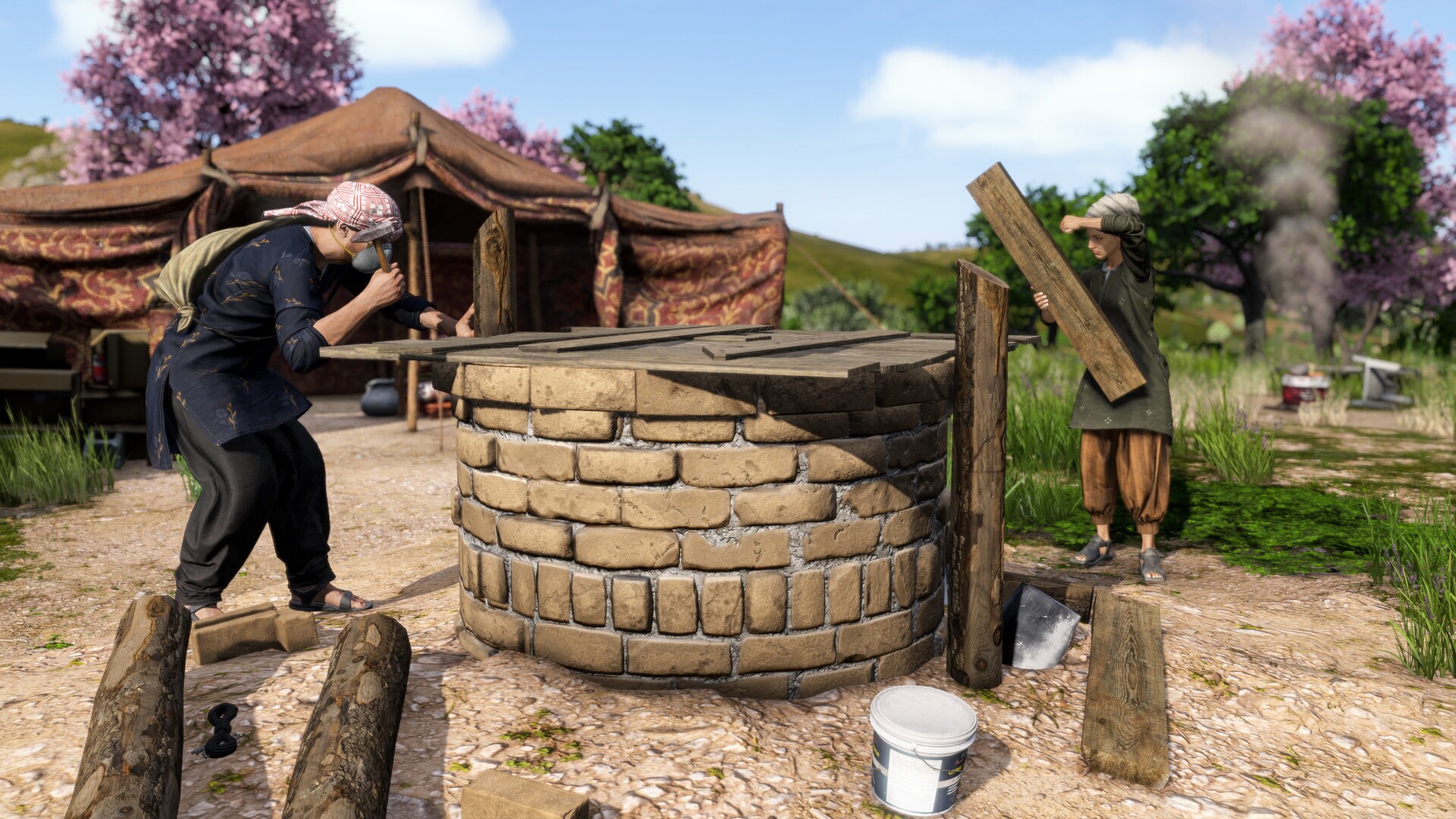
Official screenshot · Source: Steam store
Heatstroke here is a heat debt, not a disease you catch from a water bottle. Published notes on the 1.30 scripts describe a hidden value that rises while you are overheating and falls once you cool down. Your temperature indicator is the warning light. How much you have drunk decides whether that light is a suggestion or a countdown.
Community reports from the first days on the map describe the same outcome in plainer terms: stay in direct sun and the sickness stacks; break that exposure with a roof, a tree, a rock, or a tunnel and it stops climbing. Some players read the exposure check as line-of-sight to the sun. Script notes emphasize temperature state and hydration instead. Either way, the play is identical. Get out of the heat before stage three.
The other half of the problem is water. A hot character sweats. A dehydrated character cannot afford that loss, and low water is exactly when the build-up climbs fastest. That is why DayZ Badlands heat stroke and bad water choices show up together. People drink anything, get cholera, vomit, dry out, and then cook in the sun while they are already sick.
Launch-week script readings come from the experimental 1.30 build. The stable version that followed may tweak numbers. Where the game offers no item that clears the condition, this guide says so instead of inventing a cure.
How DayZ Badlands Heat Stroke Builds
There is no status icon that says "heat debt: 40%." You infer it from the temperature icon, your thirst, and symptoms that arrive in order. Antibiotics do nothing because nothing is infecting you. A thermometer is a dead end too: it reports fever, and this condition does not register as one.
Hydration changes the rules even before you feel sick. While the indicator sits in the warm, yellow range, a well-watered character does not build heat at all. Someone only about half watered can still tick upward, but they top out at the first stage. Drop below that, or let the indicator go red, and the value climbs no matter how you feel about it.
| Temperature icon | Hydration | What the heat build-up does |
|---|---|---|
| Warm (yellow) | Well watered | Does not rise |
| Warm (yellow) | About half watered | Can rise, but caps at stage one |
| Warm (yellow) | Short on water | Climbs |
| Hot (red) | Any level | Climbs even if you have been drinking |
| Cooling off, out of the hot range | Drinking while you wait | Drains on its own, slowly at high stages |
That table is the whole prevention plan. Stay out of the red, and do not let thirst sit in the danger zone while you are merely warm. The moment you are both hot and dry, you are in the fastest path to a blackout.
Player experience adds a field habit that matches those rules. People stop on the north side of the map first, where food and drink spawns are kinder, and they treat every minute of open walking as time they have to pay back in shade. Crafting, bandaging, and sorting inventory in full sun is how the debt gets ahead of you. Step under a tree or into a room first, then do the task.
Four Stages and the Signs Worth Trusting
DayZ Badlands heat stroke has four stages. Each one stacks on the last, so stage three still includes the blur and stamina loss from stage two. Early on you will not get a dramatic cue. That quiet start is why players ignore it until they are throwing up water they cannot replace.
| Stage | What you notice | What it costs you | Move to make |
|---|---|---|---|
| 1 | Almost nothing on its own | You are already sweating water in the heat | Drink and find shade before it shows |
| 2 | Blurred vision, worse stamina, the odd overheating animation or sound | You cover less ground and fight worse | Leave the sun immediately |
| 3 | Vomiting | Water, food, and stamina you needed for the walk back to cover | Stop drinking dirty sources; cool down before you sip again |
| 4 | Vision fading in and out, health loss, short blackouts | A collapse in the open can finish the run | Cover first, then drink. Do not wait it out in the sun |
Stage one is a cue, not a free pass. You are already losing water to sweat. If you keep marching, stage two makes the next town harder to reach, which means less chance of finding a well or a water truck.
Stage three is where people misdiagnose themselves. Vomiting also comes from cholera. If you have been drinking straight from ponds, tunnel pools, or other surface water, you may have both problems. Heatstroke will not clear with tetracycline. Cholera will not clear just because you sat in a house. Check the temperature icon before you burn your only antibiotics.
Stage four is the one launch-week community reports were unsure about. Players saw health loss and asked whether a late case could be walked back at all. Script notes say the build-up does drain once you are no longer hot, but from the fainting stage that drain is slow. Waiting in a doorway while you are still overheating does not count. Passing out in open sun is how an annoying debuff becomes a death screen.
Do not hunt a clinical thermometer to confirm any of this. If the icon is hot and your vision is going, you already have the only reading that matters.
How to Bring the Build-Up Down
There is no pill. You reverse DayZ Badlands heat stroke by cooling off and drinking, and the two actions support each other. Being hot and short of water is the combination that drives the value up quickest, so fixing only one of them is leaving half the fire lit.
Get the temperature icon out of the hot range first. Shade, a real building interior, or lighter and looser clothing made for Nasdara all help. Once you are no longer overheating, the hidden value falls by itself. From stage four that fall takes a long time, so do not plan on "I'll just stand here." Stack every cooling action you have.
| Action | What it does | How to use it |
|---|---|---|
| Leave the heat | Starts the natural drain once you are out of the hot range | Building, deep shade, or lighter clothes. Do this before anything else at stage four |
| Drink, and keep drinking | Slows the climb and supports the drain | Only safe water. Vomiting from stage three wastes the sip |
| Wash face | One wash cuts heat about as much as a long rest in shade, and wets clothes around the head | Well, open water, or a bottle in hand. Then wait about 30 seconds |
| Wash face again too soon | Does not lower heat further during that short lock | The build-up is frozen for roughly half a minute; extra washes in that window are wasted |
| Wet a clothing item in your hands | Keeps clothing damp for cooling; do not assume an extra reduction during the wash cooldown | Only at a well or the water's edge, via the wet-clothing action |
The wash timing is the detail most people miss. One wash is strong. It also briefly freezes the heat value, so it cannot rise, but another wash during those seconds will not push it down either. Wash once, count to thirty, wash again. When the action is available, soak a held piece of clothing to keep it damp. Do not assume this provides an extra heat reduction during the wash lockout.
At stage four, order matters. Cover first, drink second. A blackout in the sun lets the debt climb while you cannot move. A blackout in a dark room is miserable and slow, but it is survivable if your water and food are not already empty.
Community reports add two habits that fit this model. Players keep clothes as wet as they can, because soaked gear sheds heat better than dry insulation. They also split their water: clean water for drinking, dirtier water for washing, and they stop washing once clothes are fully soaked so they do not dump the bottle. Treat the "dirty wash is safe" claim as player experience, not a promise from the item description. Do not drink that dirty water afterward.
Water, Clothes, and Shade That Actually Count
Cooling fails if you have nothing safe to drink. On Nasdara, the early-game water plan is part of heatstroke defense, not a side quest.
| Source | Safe to drink as-is? | Notes for a heat run |
|---|---|---|
| Rebuilt well | Yes | Anyone can use it. Player experience says it currently lasts until a wipe; developers have mentioned future decay |
| Water truck | Yes, as a drinking source | Community reports call these the best early find. More common than other dynamic events. Loot towns that spawn them |
| Desert oasis | Generally treated as a clean natural source | Often too far for a fresh spawn. Do not plan your first hour around it |
| Pond, stream, tunnel pool, other surface water | No, if you drink by hand | Script notes: non-well surface water adds cholera every time you drink it raw |
| Bottled water plus purification tablets | Yes, aside from heavy metals | Tablets clear other contamination. They do not remove heavy metals |
| Boiled container water | Yes, if you actually boil it | Player experience: about a minute on the fire, or a chlorine tablet, or vitamins while risky water digests |
Stick to the northern, lower-tier half of the map while you are still thirsty. Player experience is that food and drink spawn more generously there than in the south. Hunting and crops work later. They will not save a character who is already fading on a road with an empty bottle.
Rebuilt wells are a team project. Fresh spawns do not have the parts, and the well sites sit far from typical spawn points. Do not wander south hunting a well you cannot finish. Find a water truck, fill up, and only then think about construction.
Underground water is tempting and often a trap. Irrigation tunnels are a headline feature, and you can climb between tunnel and surface with a ladder if you have the rope and short sticks. Drinking straight from that water is a different question. If it is ordinary surface water, hand-drinking it adds cholera. If you were vomiting despite "drinking plenty," check both the temperature icon and whether that water was a well. Heatstroke stage three and cholera feel similar and need different fixes. Tetracycline handles cholera and does nothing for heat. Vitamins support immunity while your body fights an infection; they are not a heatstroke cure.
Clothing is the other lever. Heavy, high-insulation kits make you overheat sooner. Bohemia's Nasdara outfits lean light and loose for a reason. Player experience favors pieces that can become drenched, because wet fabric keeps pulling the temperature down after you leave the bottle behind. Any clothing that can soak is useful. A stylish dry coat in full sun is not.
Shade has a quality bar, especially if a sandstorm is also in the forecast. For heat, a tree, a bridge underside, or a room is enough to start the drain. For silicosis, the dust illness, the game is stricter: you need a roof and an interior together, or you need to be underground, or sitting inside a car. A porch, a carport, or a wall-less ruin may not count. A motorbike does not, no matter how fast you ride. Community reports also push a simple route rule: go through buildings instead of around them, and use tunnels when you can, so you travel without feeding the heat bar.
If the wind picks up and a sand wall is on the horizon, heat is no longer your only timer. Face wraps, shemaghs, dust masks, goggles, or a motorbike helmet buy time in the open. They are not permission to stay out. Player experience puts storm length in a wide band, often tens of minutes, longer if you are near the edge where it rolled in. Get inside, eat, drink, and let immunity work. Silicosis fades on its own only when health, blood, food, and water are in decent shape, and it does not fade while you are unconscious. Vitamins can spike immunity for a few minutes if you are in bad shape. That is a sandstorm tool, not a substitute for shade.
Server owners who want fewer heat deaths do not get a heatstroke toggle. The condition lives in scripts. The nearby lever is the monthly maximum air temperatures in the mission gameplay config; lowering those should make overheating less common, though hosts should test it. Sandstorm frequency is a separate multiplier and does not change how the sun cooks a player on a clear day. Official patch notes on the official DayZ site are the right place to check when Bohemia changes any of this.
FAQ
Can medicine cure DayZ Badlands heat stroke? No. Antibiotics, including tetracycline, do not affect it, because it is not an infection. You lower it by leaving the heat, drinking safe water, washing your face on a timer, and soaking clothes. From the fainting stage the natural drain is slow, so start before you collapse.
Will a thermometer tell me I have it? No. A thermometer looks for fever. Heatstroke does not show up on it. Use the temperature icon, your thirst level, blur, vomiting, and blackouts instead.
I keep throwing up even though I am drinking. Is that heat or cholera? It can be either, or both. Stage three heatstroke causes vomiting. So does cholera from raw surface water, including many tunnel drinks. If the temperature icon is hot, cool down before you blame the bottle. If you drank from anything that was not a well or a purified container, take tetracycline and vitamins as well.
Does shade under a porch or on a bike count? For heat, any real break from the sun helps, including trees and bridge shade, based on community reports. For a sandstorm, a porch or open ruin often fails the shelter check, and a motorbike never counts. Use a closed interior, a car, or a tunnel when dust is in the air, and handle the heat debt in that same room.
Related Guides
DayZ Badlands base building: a Nasdara rebuild guide
Plan DayZ Badlands base building in Nasdara: rebuild houses, mix brick and wood, and keep code locks alive.
DayZ Badlands how to find water: fresh spawn guide
DayZ Badlands how to find water on Nasdara: trucks, rebuilt wells, boiling, and shade so fresh spawns do not die of thirst.
DayZ Badlands loot locations: top Nasdara spots
Map the best DayZ Badlands loot locations on Nasdara, from Dashtabad Ion Crates to toxic tunnels, dams, and locked bunkers.
DayZ Badlands early access: launch and features
DayZ Badlands early access notes meet the live 1.30 wipe: heat, water, sandstorms, bikes, and what creators could not confirm.
DayZ Badlands izurvive Nasdara Satellite Guide
Use the DayZ Badlands izurvive Nasdara map to filter loot, mark squad routes, and learn districts after the 1.30 wipe.